Showing posts with label skies of arcadia. Show all posts

Friday, October 7, 2016

My Top 115 Favorite Video Games (10-4)

The top ten begins today in the penultimate post of both this countdown and this blog. Click here to head all the way back to the introduction of this project and see where it all began before heading into the conclusion. It's a bit of a lengthier post today as this is the top ten after all and I wanted to take extra care to accurately describe just how much each of these immensely special games means to me. I hope you enjoy reading, and as always, reminiscing about some of your own memories you might have with these titles!

Without further ado, here are my current top ten favorite video games:

10. The Legend of Zelda: Ocarina of Time (N64)


In some nearly forgotten, lost pocket of time existing somewhere between 1998 and 1999, I briefly spent a few hours being confused and frightened by The Legend of Zelda: Ocarina of Time. I did not understand it, I could not pronounce “Hyrule”, the Stalchildren that appeared at night freaked me out, the Peahats that appeared during the day freaked me out. Hyrule Field felt vast and threatening, so I took shelter in villages where I felt safe…until I encountered a giant golden spider scuffling on a wall and found my way into the Royal Family’s Tomb, where I encountered this. I did not yet “get” this Zelda thing, but even so there was something mystical about my brief sojourn wandering around Hyrule as child Link; it was exciting when I found a secret passage connecting the Lost Woods and Death Mountain, bizarre elements like “Happy Masks” intrigued me, and I longed to see what lay on the other side of the map in the distant lands of Lake Hylia and Gerudo Valley. I can’t fully explain to you why I did not take the plunge and buy the game to further explore these mysteries, but I think it comes back to me being intimated and frightened by it all. Whatever the reason, I returned the game to where I’d rented it from (or borrowed it from?) and wouldn’t revisit Ocarina of Time until 2003, on the eve of the release of The Wind Waker.

When I finally did sit down to properly play Ocarina of Time via the GameCube version released as a pre-order bonus for The Wind Waker, I was older and wiser, I had experience with Link’s Awakening, Majora’s Mask, and A Link to the Past and was now eagerly anticipating the upcoming and beautiful-looking The Wind Waker, and I went into the N64 classic knowing full well its reputation and how foolish I was for passing it up several years prior. I was immediately taken aback by the title screen, the tranquil scene of link riding Epona through Hyrule Field at dawn with a contemplative piece of music playing. There was something unexpectedly subtle about the opening that caught me off guard and already a powerful emotion overcame me. It’s like they knew, I thought at the time. Knew what?

That Ocarina of Time was one of the greatest video games ever created.
It took me roughly two weeks to see the whole adventure through that first playthrough (I’ve lost count of subsequent playthroughs) and the experience lived up to it all. Ocarina of Time is just an amazing and special game. There are few games, or perhaps none, that feel as confident in their execution and that unwind as elegantly as Ocarina, where everything locks into place just so, in such perfect strokes. Ocarina of Time is a beautifully-spun metaphor about growing up. The game does this magic thing where when you’re child Link, you feel like a child: the world is brighter and livelier, and everything seems bigger. You’re just a kid playing games, going on adventures, and making friends. Then the transition to adulthood happens, and while I still want to stray away from spoilers, suffice it to say the world suddenly seems smaller, bleaker; your friends are suddenly more important than ever, and now your adventure is no longer a game but a crucially important quest, one with burden and responsibility. This theme is poetically and artfully worked throughout the entire experience, and it’s one of the reasons why I feel Ocarina of Time still has some of the best storytelling in the whole Zelda series. There’s so much more I’d like to tell you about Ocarina of Time: how I love its dense and cozy world, how magical its music is, how its finale is my favorite in all of video games, how perfect its ending scene is, what it felt like to enter the Forest Temple for the first time, what it felt like to finally reach Gerudo Valley and hear that music for the first time, how I’m tearing up just thinking of it all right now…but I’ve gone on long enough, and this is only number 10.


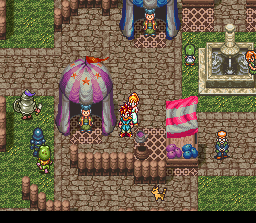
Chrono Trigger is unlike any other RPG or adventure game I have ever played. It just has this vibe…this inexplicable vibe that is difficult to grasp. The game is undoubtedly incredibly charming, for starters, featuring perhaps my favorite cast of central characters in any game, a colorful line-up of personalities that include technological genius, Lucca, chivalrous frog knight, Frog, and prehistoric matriarch, Ayla. The central time travel theme and the concept of visiting a planet’s life throughout several different stages of its history in order to learn how it became doomed and what must be done to save it was and still is original and largely unexplored territory in interactive entertainment and just a brilliant concept besides. The total surface area of the world in Chrono Trigger is actually pretty small compared to most other RPGs, but the excitement comes from exploring “vertically” and seeing how the planet changes throughout history as opposed to exploring “horizontally” across a wide area of land. The whole adventure is excellently-paced, the battle system is innovative and never feels like it bogs down the experience (partly thanks to the game dispersing with random battles), and the art and spritework is colorful and lively. Chrono Trigger is overall a journey that constantly surprises, delights, and engages around every corner.

But you know what my favorite part of Chrono Trigger is? You know what I think is perhaps the most important factor that determines that special “vibe” I mentioned? Music. I’ve brought up music a lot throughout this list, whether in regards to how important a specific game’s soundtrack is to the overall experience for me or how large a role music plays in my enjoyment of video games in general. While it might be dishonest of me to make such a definitive assertion, Chrono Trigger’s musical score has long been what I consider to be my favorite video game soundtrack of all. The game’s characters are partly so endearing because each one has their own musical motif, each time period comes alive with its own unique sound, and there are so many moments, so many perfect, beautiful moments that are so perfect and beautiful because a perfectly-suited piece of music kicks in at just the right time. The ending credits theme, “To Far Away Times”, might be my favorite single composition in video game history. Yasunori Mitsuda, the brilliant composer behind Chrono Trigger and later Chrono Cross (among other titles), poured everything he had into this soundtrack and damn does it show. Chrono Trigger is an experience that has largely stuck with me so much because of its music, and it’s a score that has basically become the soundtrack to my own life as I constantly go back to listen to it in the car, on walks, when I’m writing, when I’m drawing, when I’m in lying in bed, when I’m cleaning, when I’m dreaming, and of course right now as I write this. Chrono Trigger is a wonderful game in every respect, but its music especially is a part of my soul.


Silent Hill 2 has the best storytelling of any video game I’ve ever played. It is one of very few games that I know of where narrative seems to not only have been an extremely important focus in development, but indeed the primary focus. This isn’t a case where there’s a few hours of compelling story delivered through cutscenes intermixed with divorced gameplay sections, but rather the rare video game where almost everything serves the story. There are still cutscenes in Silent Hill 2, but the storytelling does not end when control returns to the player; every location, every monster, every moment has significance, and if something doesn’t directly influence the central narrative, than it fleshes out the universe in some way, which in turn also enhances the central story. Nothing is random and Silent Hill 2 is drenched in symbolism in an artistic way that no other video game I’ve encountered can parallel.

Disconnecting itself completely from the first Silent Hill’s narrative, SH2 follows James Sunderland, a man wrecked by grief who receives a letter from his late wife, Mary, who died three years prior to a deadly disease (it’s never named, but I assume cancer). The letter beckons James to the couple’s “special place”, the lakeside resort town of Silent Hill, and as we journey with James into the fog-enshrouded, seemingly abandoned town, we meet a variety of other troubled characters and spend a lot of alone time with our protagonist as he tries to come to grips with what appears to be reality breaking down around him. As James delves deeper and deeper into horrors that begin to slowly feel less and less external, I feel myself getting pulled down with him; as sweat beads on my forehead at 2AM as I huddle in a dark corner of a grimy hospital or walk down a dark flight of stairs that seems impossibly long, I feel a player-protagonist connection unlike any other. This is my journey just as much as it is James’s, and as this focused experience winds towards its conclusion, I feel a closeness and an empathy for James and his tormented friends few other games have ever matched for me. As the credits role, there are always tears in my eyes.

Silent Hill 2 also has a very unique atmosphere among its brethren. For one thing, largely unlike its predecessors, SH2 doesn’t feel like it’s “horror all the time” but rather contains several “relaxed” moments that while still fitting the horror theme, just feel…different somehow. There’s a feeling of deep loneliness and stagnation to the game, and some have even likened the experience as a whole to depression, which I feel is an incredibly appropriate reading. This atmosphere is of course heavily supported by the bleak and dreary art design and the unforgettable soundtrack, which probably unsurprisingly is one of my favorites in anything ever. All of this too serves the narrative, but I also think this “feeling” that Silent Hill 2 has is one of the main reasons this entry in the Silent Hill series in particular has left such a strong impression on so many people; I can at least say that this is largely the case for myself.

As a thoughtful human story, one that deals with taboo subjects in a mature way rarely seen in this medium, Silent Hill 2 was not only way ahead of its time, but is still ahead of the curve today compared to most other games. As an atmospheric feeling, it is uniquely dreary and affecting. And as a piece of horror fiction, as my favorite piece of horror fiction in fact, it has left a scar on me. I watched my older brother play almost the entirety of the original Silent Hill when it first came out, but I couldn’t even stand to watch him journey that deep into the early apartment building area in Silent Hill 2. There was something about this game that kept me up at night even just knowing it was being played in the other room. I avoided Silent Hill 2 for years until it finally called me back to it when I was a sophomore in college. I said before that I probably consider the first Silent Hill to be the “scariest” in the series, and Silent Hill 3 is probably the most viscerally unnerving, but Silent Hill 2 is the most lingering. I used to see an advertisement for the game in Electronic Gaming Monthly around the time it released that I would actively try to avoid looking at. “Wounds will heal…” it read, “…but your mind will be scarred forever.” To this day I still catch myself every so often having a bizarre nightmare of being trapped in a hellish hospital as unfathomable creatures, including a hulking Pyramid-headed one, stalk me in the dark.

NOTE: This blurb originally contained a line relating different colors to different Silent Hill games, but I removed it because it was similar to an idea contained in YouTube creator Jordan Underneath’s Silent Hill 3 video, "Silent Hill 3 and the Worst Movie Ever". When I originally wrote this, I suppose I was thinking of this idea as a kind of universal truth about the Silent Hill games (I really can’t remember if I necessarily got the idea from Jordan’s video or also had it on my own before watching his video) but have since reconsidered and out of respect for Jordan’s work, and to avoid the risk of stealing his idea, I’ve decided to take the line out. While I'm sometimes inspired or gain knowledge from other creators, I always strive to use my own words and ideas. Also, when I mentioned that some have likened Silent Hill 2 to depression, I was talking about Jordan’s brilliant video on Silent Hill 2 (appropriately titled "Silent Hill 2 and Depression"), which I originally linked to but Jordan has since removed. After a re-branding of his YouTube channel, Jordan has since deleted all of his video game-related videos, including his Silent Hill videos, but you can check out his newer, more artistic videos on his channel, “Jordan’s House” (I highly recommend you do as well, as his surreal, atmospheric short films are really something special). While I highly doubt Jordan will ever see this, I nevertheless apologize to him if it seemed like I was trying to steal his idea, which absolutely was not my conscious intention.


As I clutched onto the back of a gargantuan bird soaring over a vast lake, the wind pummeling me and the creature ferociously beating its great wings and spinning upside down in an attempt to shake me off, I knew I was experiencing a historic moment in video games. I knew Shadow of the Colossus would go on to be regarded as one of the greatest works in the medium. The sixteen colossus battles are varied, intelligently-designed, and easily some of the most emotionally epic encounters in any video game I’ve ever played (and are backed by an outstanding soundtrack), but when I think of Shadow of the Colossus, I just as readily think of the space between these stunning conflicts. Quiet, lonesome moments spent journeying across sprawling plains and vapid deserts with my only companion, my horse, Agro, who I found myself more attached to than any other companion-type character in video games. Discovering forgotten ruins on a mountain ridge, knocking apples off of a solemn tree on a seaside cliff, or simply marveling at the breadth and the wonder of it all…it’s these moments I cherish. In a somewhat similar way to Silent Hill 2, it is this lonely atmosphere that calls to me and connects me with Shadow of the Colossus, that creates a powerful kinship with the game in me, but the feeling present in both of these experiences is very different; Silent Hill 2 feels akin to depression, whereas Shadow of the Colossus feels more like contemplative isolation. Also like Silent Hill 2, except to an even greater degree, the minimalism and starkness of Shadow of the Colossus demonstrates the greatly untapped emotional potential of video games beyond film-like cutscenes, wordy scripts, and a neatly divided gameplay/story philosophy; Shadow of the Colossus lets you live its narrative, feel the pain of its protagonist, and feel the pain of every beast you slay. It is a marvelous experience that nothing has ever rivaled for me.


Adventure and discovery. Skies of Arcadia embodies adventure and discovery. Despite all the Dreamcast love on this list, I strangely did not actually play Skies of Arcadia on its debut console and instead played the 2003 GameCube Legends port, which is essentially the same game with a few tweaks here and there and a few extra sidequests. Skies of Arcadia is my favorite RPG; it’s everything I love about the genre contained in a single experience. I received Skies of Arcadia as a birthday gift in 2003 and was pulled into a world of adventure that didn’t let me go until very late that night, at which point I was already emotionally attached to the characters and the world. And what a world it is. I often criticize the lazy perpetuation of traditional video game environment clichés these days (forest, desert, ocean, etc.), but I’m not inherently against them, and if you want to see a game where these tropes are richly explored and used in an imaginative, effective way, look no further than Skies of Arcadia. The culturally and environmentally distinct lands of Arcadia make for an unforgettable world where the possibilities seem to be endless. It’s a world of floating continents and airships, air pirates and evil empires, of flying monsters and ancient weapons, lost civilizations and countless unsolved mysteries, of daring rogues and fierce friendships. It’s like some dream mixture of Star Wars, the works of Jules Verne, and the films of Hayao Miyazaki. Skies of Arcadia contains a fair bit of the usual JRPG clichés, but it also eschews many of them, particularly in regards to its overall positive and upbeat vibe and easy-to-follow but unpredictable narrative. The cast of upbeat characters is also simply darling, and in particular the three central characters of Vyse, Aika, and Fina are a group of tightly-bound friends who I grew to immensely love.

The beating heart of Skies of Arcadia undoubtedly lies in its sense of adventure, facilitated through a focus on exploration and discovery that is prevalent throughout almost every aspect of the game. The world of Arcadia is full of mysteries to ponder and discoveries to be made, hidden areas and nooks to uncover, dangerous bounties to hunt, and all myriad of secrets stowed in far-off corners of the world where who knows what lies in wait. My favorite sidequest in the game involves chronicling Discoveries made (each one providing a bit of lore and intrigue) and selling information about them. Eventually, you are able to recruit your own rogues’ gallery, build a base, and customize your own airship. Skies is simply one of the best times I’ve had exploring and discovering in a video game, and that’s really saying something for me. This central tenet of adventurous discovery is clearly manifested throughout Skies of Arcadia's wonderful soundtrack, and no more clearly than in the game's final traveling theme, which is my favorite in any game. The appeal of Skies of Arcadia largely lies in its traditional, swashbuckling atmosphere of adventure and discovery, but also in how it takes this familiar theme and builds a fantastic world beyond imagination around it, surprising and enamoring the player at every turn.

5. Sonic the Hedgehog 3 and Knuckles (Genesis)


When I think about what makes a great platformer for me, i.e. creative and memorable levels filled with secrets, a sense of connection and level-to-level progression, a non-intrusive but effective narrative, a moderate but non-frustrating challenge, and great art design and music, Sonic 3 and Knuckles, a.k.a. the true Sonic the Hedgehog 3 born when combining Sonic 3 with Sonic and Knuckles, immediately comes to mind. Picking up right where Sonic 2 left off both design and narrative-wise, Sonic 3 is a platforming legend that amazingly seems to often go overlooked in favor of Sonic 2 (probably in large part because of its weird double-game nature and relatively late release). The level design of Sonic 3 balances a satisfying sense of speed and momentum with more traditional platforming challenges more elegantly than ever before, the art design builds on the previous titles’ uniquely surreal but also realistic look culminating in what is one of my favorite retro aesthetics, the music is the height of classic Sega Genesis tunes, and I am still making new discoveries in this game’s massive and intricate stages to this day. I’ve always admired the creativity present in the Sonic series’ zones from a thematic perspective and Sonic 3 is the pinnacle of this imagination as Sonic and friends race through a vast sunken city, a vibrant amusement park metropolis, a dense season-changing forest, and an immense flying battleship, among so much more. Sonic 3 is also one gigantic, interconnected adventure as the end of each level seamlessly blends into the next area, creating a sense of cohesion and progress. The two individual Acts of each Zone also often differ from each other in dramatic ways and environments sometimes change in real time, like when Dr. Robotnik’s machines turn the jungles of Angel Island Zone into an inferno or when the bad doctor uses a giant drill to cause earthquakes that shift and alter the landscape of Marble Garden Zone. Even though the levels are more gigantic than ever before, nothing ever becomes stale because of this constant variety. The story of Sonic 3 is also subtly told not only through brief little “cutscenes” usually involving Knuckles messing with Sonic and Tails in some way, but also in the level themes themselves, such as Launch Base Zone, an inventive location where we can see Robotnik’s gigantic doomsday weapon, the Death Egg, being repaired in the background…before of course going back there in the second Act to try to stop it from launching. 

Indeed, much of the stuff I love about the brilliant Donkey Kong Country: Tropical Freeze, my favorite modern platformer, was present in Sonic 3 and Knuckles years prior. There is such a wonderful attention to detail in Sonic 3 and the result is a platformer that doesn’t just feel like a bunch of disconnected levels you hop and bop through to get to the goal, but rather an epic journey that feels incredibly satisfying when all is said and done. Besides all this, Sonic 3 and Knuckles seems to be a treasure trove of secrets waiting to be uncovered, and there was a real sense of mystery surrounding Sonic the Hedgehog 3 and Sonic and Knuckles when I was a kid. This partly stems from the fact that there are puzzling elements in the stand-alone Sonic 3 that betray its incomplete nature, such as mysterious unreachable paths that wouldn’t become fully explained until one could return to them with a playable Knuckles. Along with a Tails who could actually fly this time around, there are actually three playable characters who all feature a unified gameplay style but each have their own unique skills that allow them to reach new level sections; Knuckles’ story in particular, which takes place after the main events of the game, diverges dramatically from the route Sonic and Tails take. The series’ patented “Special Stages” are also finally not extremely difficult garbage and this is still the only Sonic game to date where I’m able to acquire every single Emerald and obtain all of the characters’ super forms the legitimate way…and I also enjoying doing so to boot! As an added bonus on top of everything else, Sonic 3 and Knuckles even has an interesting connection to Castle in the Sky, one of my favorite Hayao Miyazaki-directed films! I have no hesitation in saying that Sonic 3 and Knuckles is the absolute pinnacle of this series, a timeless platforming masterpiece, and also my personal favorite platformer of all time tied with the next game on this list, which is of course…


Super Mario Bros. 3 is my favorite Mario game, my favorite NES game, and my favorite platformer of all time tied with Sonic 3 and Knuckles. I have a nostalgic attachment to this game unlike any other and just beholding its yellow and blue boxart makes me melt, nevermind listening to any of its music or sound effects. It had a tremendous influence on my imagination as a child, and it continues to do so today. The game even initially released in Japan the year I was born and it came to the states on my second birthday; it was meant to be. It’s easy to retroactively look back at Super Mario Bros. 3 as basically the standard Super Mario title. After all, airships, the Koopalings, the familiar world themes, the raccoon tail, it’s all here, and it all started here. But that’s the key element: all of this was new in Mario 3, and back in 1988 this game was a powerhouse of invention that aside from bringing back Super Mushrooms, Goombas, and traditional platforming gameplay, was just as creative and weird and distinct as Super Mario Bros. 2 before it. While I heavily criticize just how much the Mario series constantly and nauseatingly recycles elements from Mario 3  today to the point where the whole Mario franchise has largely become stale and quite boring compared to what it once was, I don’t let that current reality sour this original masterpiece, which in addition to introducing all that stuff also does dozens of other wonderful little things that newer Super Mario titles don’t emulate and that make this game still far and beyond them all.

The creative genius of Super Mario Bros. 3 is in the details. Did you know the entire game is themed around a stage-play? That’s the context for those big blocks with screws in them; they’re stage props. A world map was introduced here, but it’s more than just a level select screen; it’s full of little secrets of its own and contains all sorts of neat interactive moments like being able to guide a rowboat out to some bonus islands in the water land. Then there’s the fifth world, which at first glance seems like just a small landmass with a mysterious spiraling tower at the far end of it. Climb that tower though and…. Yes, there’s a desert land and a water land that come second and third respectively, but besides this being the game that established that formula in the first place, it uses these themes with style and still manages to branch outside of them with some really imaginative ideas for the time, like a world where all the sprites are mega-sized. The narrative also isn’t just Bowser kidnapping the princess, which doesn’t actually happen until the very end of the game in this one, but instead sees the plumber brothers venturing outside the Mushroom Kingdom proper to the larger Mushroom World, where the various kings of different lands have been transformed into dogs and seals and spiders and all manner of other creatures by the nasty magic wand-wielding Koopalings. Another element that I admire about Mario 3, and actually something I admire about all three NES Super Mario games (four counting The Lost Levels), is atmosphere. I described the original Super Mario Bros. as having a uniquely stark and weighty atmosphere and a similar kind of feeling extends to its NES successors as well. The castles and airships feel truly foreboding in Mario 3, there’s a sense of mystique surrounding certain areas like the ice land (which is embodied in its theme music), and the world as a whole just seems to feel more immersive in a way.  I actually just played through most of Super Mario Bros. 3 this past weekend and it always amazes me not only how varied and memorable each level is considering the limited tech at the time, but also how, similar to Sonic 3, I’m still finding new secrets in this game to this day. Like the original Super Mario Bros., Super Mario Bros. 3 is a game that I can return to and play through at any time and always immensely enjoy, and each experience also always seems to bring new discoveries.

Super Mario Bros. 3 was, to put it plainly, the game that I wanted to play throughout my childhood. Like, all the time, over anything else. I owned it myself for a brief period of time, but I mostly remember relying on outside sources. If someone had Mario 3, I wanted to visit them and play it, and if I went somewhere and someone had Mario 3, I had to play it. Before the days of the Virtual Console and re-releases, there was a long period of time where I dreamed of someday having ready access to this game. Nowadays I own Mario 3 in just about every way one can and I feel like I take such an unbelievably wonderful thing for granted. I didn’t actually fully complete the whole game until the Game Boy Advance port (which is based on the SNES Super Mario All-Stars remake), and while I love every version of this game, I definitely prefer the original NES one, which I find leaves a lot more to the imagination in regards to its visuals and atmosphere. Also nostalgia. Warm, fuzzy, lovely nostalgia. When it comes to my favorite entries in several of my other favorite video game series, I have to put some thought into it and often wind up with a lot of ties or no clear winner at all, but throughout my life Super Mario Bros. 3 has always been my favorite Mario game. There’s never really been any question; I just love this game with all my being.

---

Phew! I thank you if you took the time to read all that, or even if you read any of it! Clearly, these seven games are incredibly important to me, but there are still three more yet.... Next time, please join me for the big finale as I close the doors of The Stock Pot Inn with a grand celebration of my three favorite games of all time. 

Yes, please join me for the Carnival of Time.

Wednesday, September 19, 2012

My Top 15 Favorite Video Games of All Time (2012)

I had a difficult time numbering these, but ultimately the numbers don't matter too much aside from the top two or three. I also limited my choices to one game per series for this list. This list is also, of course, open to change in the future.

Here are my top fifteen favorite video games of all time!

15.) Castlevania: Dawn of Sorrow: I adore the Castlevania series and if I had to pick a favorite, it would be Dawn of Sorrow for the Nintendo DS. Simply put, this game is a perfection of the “Metroidvania” formula pioneered by Castlevania: Symphony of the Night. It has a huge castle to explore, my favorite magic and equipment system in the series, epic bosses and enemies, a great soundtrack as always, and is just overall the most perfect Castlevania game I can think of.

14.) Metal Gear Solid 3: Snake Eater (Subsistence version): The jungle environment in this game makes for some really exciting stealth scenarios and I love the survival and camouflage mechanics. The game also gives the player the freedom to explore and tackle situations in different ways. The story of The Boss and Naked Snake is quite touching as well. This game is simply the most fun I’ve ever had playing a Metal Gear game. So fun in fact, that I played through it once on a borrowed copy and then went out and bought my own copy and played through it again.

13.) Metroid Prime: Metroid Prime built on the atmospheric game design first established in games like the excellent Super Metroid and delivered a gorgeous 3D alien world to explore. The environments in this game are astounding. I’ll never forget the first time I stepped out into the gorgeous, snowy landscape of the Phendrana Drifts and watched the ice flows drift by to that peaceful music.

12.) Kirby’s Dream Land 2: This is a choice born mainly out of nostalgia, but Kirby’s Dream Land 2 is also a great platformer. This game is one of my childhood favorites and it captured my imagination when I was younger. I even wrote a short story for school partly inspired by this game. I played this game for hours and hours and had so much fun exploring every secret of Dream Land with Kirby and his friends.

11.) Okami: Everything about Okami is wonderful. The fantasy Japanese world is full of memorable locations and characters, the game’s visuals look like a classic Japanese painting come to life, the gameplay is fluid and fun, and the Celestial Brush (which allows the player the turn the world into a canvas and paint objects into reality in order to solve puzzles) is still one of the most unique and interesting gameplay mechanics I’ve ever seen in a game. “Masterpiece” just seems so appropriate a word when referring to this work of art.

10.) Half-Life 2: Something that a lot of my favorite video games have in common is a captivating atmosphere. Half-Life 2 features a brilliant, layered world that combines atmosphere and excellent sound design to draw the player in. It also doesn’t hurt that every single part of this game is engaging. Each stage in the game delivers something new and exciting for the player to experience. I haven’t played the game in years but still remember sections like the creepy Ravenholm, exploring empty seaside cottages, building bridges out of junk with the gravity gun to avoid creatures dwelling under the sand, and hiding from gigantic tripods trying to hunt me down. Half-Life 2 is simply a perfectly designed game, featuring a brilliant narrative that is unfolded through gameplay, a rich world full of secrets to discover, and pitch-perfect gameplay. It is a game that melds story, gameplay, world and art design into one unforgettable package.

9.) Shenmue: The word “realism” gets tossed around a lot when it comes to talking about the latest, greatest video games, but when Shemue was released gamers had never seen such a living, breathing world that felt so real before. It might seem trivial to some, but it was just so cool to me that every drawer could be opened, every object picked up, and that every character could be spoken to. Little things like going into a shop and examining packets of noodles are so fun to me in this game. I have a love of Japanese culture and Shenmue catered to this love as well as provided a rich world to explore, experience, and live in.

8.) Silent Hill 2: I remember watching my brother play Silent Hill 2. The dark, cramped apartment building in the game with its creepy ambient noises and twisted mannequin monsters freaked me out so much I had to leave his room and avoided the game afterwards. A long time passed before I finally played this masterpiece for myself and not only was my trip to Silent Hill a truly freaky one, but one with a potent human story lying underneath. This game still has the best-written and most-detailed story I’ve ever seen in a video game to date. I don’t think I’ll ever be able to praise the depth and richness of this experience enough. Play it, damnit!

7.) Shadow of the Colossus: I’ve never played any other game as epic, melancholic, and maybe even as beautiful as Shadow of the Colossus. This is a story about a boy and his horse, and their lonely journey to slay sixteen gigantic beasts in order to fulfill a wish: to bring a loved one back to life. Shadow of the Colossus involves a minimalist narrative that sweeps the player into a lonely world and forces them to question their own actions, which they are forced to carry out if they wish to complete the game. It also probably has the most epic boss encounters in any game ever.

6.) Chrono Trigger: Chrono Trigger is a true masterpiece in every sense of the world. It combines simple yet deep gameplay, wonderful music, a gorgeous and imaginative world and a thrilling story with memorable characters into one fantastic adventure. Play Chrono Trigger and you’ll be stunned by just how whole and complete the game is. Travelling through time to several different eras in the lifespan of a planet was and still is a revolutionary and amazing concept. Characters like Frog and Robo will always have a special place in my heart. And did I mention this game (along with its sequel, Chrono Cross) has my favorite soundtrack in all of gaming?

5.) Golden Sun: The Lost Age: Another masterful RPG, Golden Sun: The Lost Age is pretty much my ideal RPG: a giant, gorgeous world to freely explore, a simple and fun battle system with epic summons and magic spells, an engaging story, a great soundtrack; like Chrono Trigger, Golden Sun is just the whole package. This game’s world design is incredible and I loved exploring every area the world had to offer, both optional and mandatory ones. I really can’t say much else, except that this would be my favorite RPG of all time if not for one other game which appears a little higher on this list.

4.) Sonic the Hedgehog 3 and Knuckles: This awkwardly named game is the true Sonic the Hedgehog 3 that is born when Sonic 3 is attached to Sonic and Knuckles. Sonic the Hedgehog is a massive part of my childhood and will forever have a huge place in my heart and soul. Sonic 3 and Knuckles is my favorite Sonic game; it’s the most complete and perfect Sonic experience there is. Superb and imaginative level design, a fantastic soundtrack, and perfect platforming gameplay make for one incredible game and an integral part of my gaming career. I play through this game at least once a year.

3.) Super Mario Bros. 3: Mario 3 is a masterwork and my favorite platformer of all time. Tons of awesome power-ups, crazily imaginative world and level designs and an unforgettable soundtrack; this game has it all. I really can’t put my love for Mario 3 into truly effective words: it’s just a perfect gaming experience and I’ve played though it time and time again. It is the quintessential Mario experience.

2.) Skies of Arcadia (Legends version): My favorite RPG of all time, Skies of Arcadia is not simply a video game, but a true adventure. I have so many memories of endlessly exploring the sky both above and below the clouds and across numerous floating islands and continents. An engrossing story, endearing characters, beautiful music, and those big, open skies to explore…everything just so perfectly captures that sense of adventure and wonder that the human soul craves. An unforgettable masterpiece.

1.) The Legend of Zelda: Majora’s Mask: Here we are. My favorite video game of all time. It’s a game about healing. Throughout the game, Link heals and helps many people. And healing is precisely what this game does for me, and what video games as a whole do for me. They heal my soul. They cheer me up when I’m sad, they keep me company when I’m lonely, they stir my imagination, they challenge my mind, and they make me happy to be alive. I’ve gotten to know many video games over the years and one has always stood out among the rest. Call it powerful nostalgia or call it what you will, but Majora’s Mask is simply the reason I play video games. A touching story, layered and blissful gameplay, an unforgettable world and countless endearing scenarios all meld into the experience that is closest to my soul among all of video games.

Wednesday, August 22, 2012

My Top Ten Favorite Video Game Soundtracks (2012)

Music has always been a very important part of my gaming career. Video games often exhibit such a beautiful musical presentation that these soundtracks stay with me long after the game is over. Here is my list of my top ten favorite video game soundtracks of all time. I tried to limit things to one game per series, but I had to make a few exceptions. There are also many games that did not quite make this list, but were very close. It was a tough list to make!

10.) Streets of Rage 2: The entire Streets of Rage series has excellent music and part two is the best of the bunch. From the memorable intro theme (which doubles as the haunting melody that plays on the final stage), to the iconic music of Stage 1 all the way to the endlessly badass theme of my favorite boss in the game, Shiva; this game has a beautiful score. Every track is composed to not only suit the atmosphere of the situation but also to get the player pumped up to clean up some streets. Yuzo Koshiro and Motohiro Kawashima did some truly fantastic work here.

9.) Kirby 64: The Crystal Shards: Like many other games on this list, Kirby 64 is part of a series with a tradition of excellence in music. Kirby 64’s varied soundtrack stands (or floats) at the top of the pink cream-puff’s musical legacy for me personally. I’ll always remember themes like “Ruins”, “Shiver Star”, “Factory Inspection” and of course my favorite final boss theme of all time: “02 Battle”. The game’s tunes range from traditionally cheery Kirby stuff to haunting and atmospheric pieces like the Ruins theme and “Factory Inspection”, to some really moving stuff like the 02 battle theme. Jun Ishikawa and Hirokazu Ando are to thank for this beautiful selection.

8.) Sonic the Hedgehog 3 and Knuckles: The Sonic series is known for always being stellar in the music department. For me, Sonic 2 and 3 have always been the best musically, but in the end, part three manages to spin dash into first place. I just love the melodies and instruments used in the game. Angel Island Zone, Hydrocity Zone, Ice Cap Zone, Launch Base Zone, Flying Battery Zone, Lava Reef Zone…the list goes on and on. The music is upbeat, jazzy, thoughtful and always enjoyable. Sonic 3 and Knuckles has a very long list of composers (including some help from Michael Jackson himself) and all of their talent really shows in the final product.

7.) Skies of Arcadia: RPGs usually always have memorable soundtracks and Skies of Arcadia is no exception. I love almost every single track in this game. From the moment the beautiful title screen theme begins to play, the player knows they’re in for a fantastic soundtrack. The Kingdom of Ixa’taka theme, The Valua City theme, the adventurous Delphinus world map theme (which dynamically changes depending on which part of the world you are in) and so many more are all brilliant. Every track in the game perfectly suits the location or situation is is played against and is enjoyable to listen to. Yutaka Minobe and Tatsuyuki Maeda accomplished stunning work here.

6.) World of Goo: Oh man, World of Goo…World of Goo. I don’t even know where to begin. Composed by just one man, the incredible Kyle Gabler, World of Goo’s soundtrack is one of the most original and breathtaking I’ve ever had the pleasure of hearing in a video game. From the nostalgic “Ode to the Bridge Builder” to the haunting “Years of Work” to one of the most moving ending themes ever composed in “Best of Times”, this soundtrack elevates itself high above so many other works. Seriously, you have to listen to some of this stuff.

5.) Silent Hill 2: Here we are at the top five and Akira Yamaoka’s masterful work in Silent Hill 2 is more than worthy. Really, just about any of the following contenders could be number one as they all exhibit the very top of their class. The Silent Hill series has incredible music and sound design and Silent hill 2 is the best of them all. This soundtrack is at times melancholic and haunting and at others extremely moving. It is alternately uplifting and depressing and always atmospheric and fitting. Have a listen to just a few tracks from this stellar score, "Theme of Laura" and "Theme of Laura (Reprise)".

4.) Shadow of the Colossus: Like Silent Hill 2, Shadow of the Colossus is a video game that blends atmosphere and music with perfection. Ko Otani composed a true masterpiece here. The slow and thoughtful opening theme, the grand and epic music that plays during a colossus encounter, the emotional ending theme: everything is perfect. The soundtrack fits the game so well because it dances between an epic and melancholic score and anyone who has played Shadow of the Colossus knows how appropriate this is.

3.) Castlevania series: It’s here in the top three that I cheat a little bit. I can’t honestly single out one Castlevania soundtrack from all the rest because for one thing they are all just so damn fantastic. Secondly, the entire series features perhaps more remixed and different versions of recurring songs than any other and for that reason it is almost like the whole series has one giant soundtrack. And what a gorgeous piece of work it is. Dozens of composers over the years including the incredibly talented Michiru Yamane created a true legend. Have a listen to "Vampire Killer" and "The Sinking Old Sanctuary".

2.) TIE: The Legend of Zelda: Majora’s Mask and The Legend of Zelda: The Wind Waker: I had a very hard time choosing which soundtrack from the Zelda series to pick, so hard in fact that I decided on picking two games from the bunch. Majora’s Mask features a very emotional and at times disturbing soundtrack which includes some of my favorite themes in the entire series such as “Clock Town, First Day”, “Giants’ Theme” and perhaps my favorite song in the entire Zelda series: the “Song of Healing”. Koji Kondo and Toru Minegishi did wonderful work here. The Wind Waker has an extremely well-balanced and gorgeous soundtrack. I love almost every single track in the game. From the cheery and cozy “Windfall Island” to the haunting “Sage Laruto” to the epic music that plays during the final boss battle; everything is atmospheric, moving, and joyous to listen to. Kenta Nagata, Hajime Wakai, Toru Minegishi, and Koji Kondo all worked together to create something truly special here.

1.) TIE: Chrono Trigger and Chrono Cross: I couldn’t choose just one of these stellar soundtracks because they both mean so much to me. I’ve honestly listened to the soundtracks for Chrono Trigger and its sequel, Chrono Cross, more than any other game and I still listen to them on a regular basis today. They just never get old and remain touching and beautiful to me to this day. Chrono Trigger presents the best of the 16-bit best and has my favorite video game song of all time: “Time Circuits” (or “Corridors of Time” as it is also known). Yasunori Mitsuda, Nobuo Uematsu and Noriko Matsueda are legends. Chrono Cross followed suite with a beautiful and stirring soundtrack of its own composed by Yasunori Mitsuda once again. The opening theme “Time’s Scar” really gets the player excited to begin the game and the haunting themes of the Dead Sea and Chronopolis will always stay in my memory. And then there are the ending themes of “Life~A Distant Promise” and “Radical Dreamers”, two of the most, if not the most moving ending themes I’ve ever heard in a video game (along with Chrono Trigger’s own “To Faraway Times”).
                But it’s more than just beautiful music. The soundtracks to Chrono Trigger and Chrono Cross have truly inspired me over the years. They’ve influenced my writing and sparked my imagination. They’ve cheered me up when I’ve felt sad or lonely, and as corny as it might sound, they’ve truly touched me and given me back my enthusiasm for life when I’ve needed it most sometimes. They are my favorite video game soundtracks of all time and I will continue to listen to them again and again and again for as long as I can.